
News

Insight

The Next Media Battleground

Oct. 28, 2026

By Swapnil Patel, Co-President at Attention Arc


The Next Media Battleground

For decades, media has started with one question: Who are the people we're trying to reach? To answer it, we work to understand what motivates them. What problems are they trying to solve? What influences their decisions? Where can we reach them with the right message, at the right moment, in the right context? Everything else, the strategy, media plan and creative, follows.

That's still true. But the path between brands and people is beginning to change.

Think about shopping for auto insurance. Maybe your premium went up, you bought a new car or, thanks to the direct mail pieces we all get, you finally decided it was time to see if there's a better deal elsewhere. Chances are, you already have a handful of insurance brands in mind, in part because you've seen or heard their advertising countless times. You might search for providers, visit a few websites and get some quotes. That's when the decision becomes more tangible. How much could you actually save? How does the coverage compare? And is the difference enough to make you switch from a brand you know and trust to one you may know less about?

Now imagine bringing an AI assistant into that process. You give it some basic information about your cars, drivers, current coverage and what matters most to you. It can research the options, compare coverage and prices, look at reviews and help narrow the field. You still make the decision, but you may no longer participate directly in every step that leads to it.

And there's a much broader shift happening underneath that behavior. For the first time, automated traffic now accounts for more than half of internet traffic. That doesn't mean AI agents are making half of people's decisions, but it does mean the internet is increasingly being navigated by machines as well as people. At the same time, nearly half of online shoppers used AI to research their most recent purchase, while companies like OpenAI, Google, Visa and Mastercard are building the infrastructure for AI to do more than answer questions.

This makes things really interesting for media. Years of advertising may have helped put three or four insurance brands in my head before I ever decided to shop, but what happens when an AI assistant evaluates a much broader set of insurers and only puts three in front of me? What does reach mean then? Where did consideration happen? And what made those three brands make the cut?

That's also why the conversation around answer engine optimization and generative engine optimization is worth paying attention to. Brands need to make sure the signals that establish credibility with people, from authoritative content and third-party reviews to clear, accurate information, are also accessible to the systems increasingly helping them make decisions. That doesn't make building awareness, credibility and preference with people less important. It adds another dimension to it.

At Attention Arc, we talk a lot about media starting and ending with people. I don't think AI changes that. Behind every agent is still a person with goals, preferences and constraints. But increasingly, all of us as marketers will need to understand how those human needs and preferences translate through the systems helping people make decisions. And get smarter about what happens in between.

Insight

Participate or Perish: What Leading a Business Through Accelerated Change Actually Looks Like

Sep. 22, 2026

By Zoe Eagle, CEO, Iris London

You cannot change a business without changing its culture. What I've come to believe is that managing change itself is close to the whole job of a creative agency CEO these days, because in the current business environment, change has become the only constant we can rely upon.

Culture isn't a values poster. It's the sum of how people behave: what gets rewarded, what gets tolerated, what gets quietly punished. Announce new values as often as you like. If the system keeps rewarding the old behaviours, the old culture wins.

Cheil's Iris London is a useful case study for agencies everywhere, and especially for the wider Cheil network, because we've all been dealing with the same thing lately: real economic, cultural and technological change happening all at once, with very little precedent to lean on. I've spent the last 20 months leading that kind of change here, built around a simple transformation plan: Rebrand, Reshape, Rebuild.

Rebrand

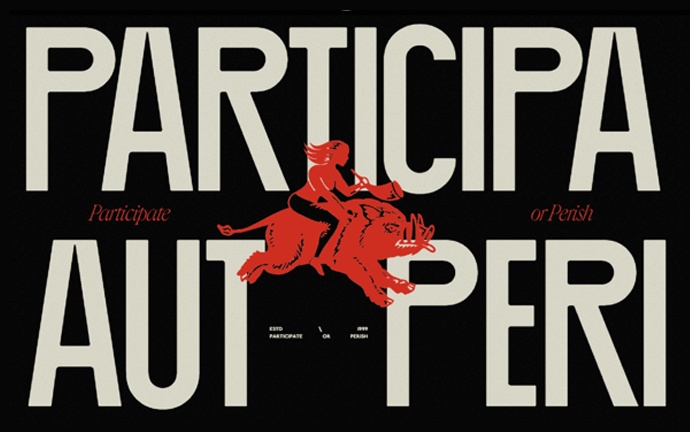
We started with the most visible layer: a new identity, and a rallying cry, Participate or Perish, aimed as much inward as outward. It mattered more than it sounds: a level-up in confidence, and a clear answer to what kind of business we intended to be. But a rebrand is the easy part. The real work came next.

Reshape

The organisation we inherited at Iris London had taken shape through day-to-day necessity, rather than any deliberate plan.

My view is that you should work out what a business is already best at, and shape from there. We used the two best pieces of work already in the business as the blueprint.

Samsung Skate found a white-space opportunity in the client's own metrics, turned into a disruptive campaign that won conquest share with an audience they were losing. Beiersdorf's Nivea uncovered a significant missed opportunity in uncaptured search traffic, winning Performance Marketing honours at the UK Marketing Society Awards and a Grand Prix shortlisting. In both cases, we'd found a data-validated issue and opportunity, then used genuinely incisive cultural insight to meet it. The creative approach in each case was driven by the solution, not the channel, pulling capability together from across the business to create disproportionate impact. In short, the whole was greater than the sum of its parts. These two examples showed us exactly how to shape a business that could actually deliver Participate or Perish: impact through an integrated approach, rooted in culture, with the creative flair to be unmissable.

So, we rebuilt the leadership team to be genuinely integrated across every discipline rather than channel heads protecting their own patch. Data went into the centre of strategy, and we invested properly in creative capability itself: design, creative, social, PR, building both the thinking and the performance behind it.

While structure and shape are vital, they're all in service of what actually makes agencies valuable: our ability to nurture creative talent that produces brilliant, provocative, unmissable thinking in the first place. So across all of this, we were careful to embed a culture of psychological safety, experimentation, curiosity, fun, and permission to fail.

Rebuild

Rebuilding meant relearning our pitching approach and being honest about where we were strong. What became undeniable was that we were winning by integrating capability across disciplines. Every pitch Iris London has won this year has been won on that basis, which showed us where to double-down. We don't beat specialists at their own game. We change the game.

Reward what you want repeated

None of this holds unless the system rewards the behaviour you want repeated. We rebuilt our Talent Review systems around three principles. Passion: real drive to change the outcome, not just follow instructions. Proactivity: understanding the vision well enough to pursue it unprompted. Performance: getting honest about impact. The business had valued longevity and loyalty above almost everything, so we needed to pivot immediately to focus on impact and quality. Our new KPIs focused on client revenue growth, product excellence and productivity.

The leader has to change too

My hardest lesson has been personal, as in times of transformation leadership itself has to evolve. Early on, a CEO needs to be directive: making calls, creating clarity where none exists. Left unchecked, that behaviour becomes the thing holding the business back. I ask myself constantly what the organisation needs from me now, and whether the way I'm leading still builds the business I want. 

Other leaders are vital here. In my case, the broader Cheil community has helped me keep changing in the way the organisation has needed, through fresh ideas and real support. Often the best thing a leader can do is simply ask for advice.

Culture isn't what you write down. It's what actually happens. My job is to build the structures, the momentum and the permission that let the business move the way I want it to, and then keep re-embedding that culture into every behaviour. The change isn't stopping any time soon, and neither can we.

News

Commercial Production is Turned into a Demonstration in Hanwha Vision’s “Now You See” Campaign

Sep. 17, 2026


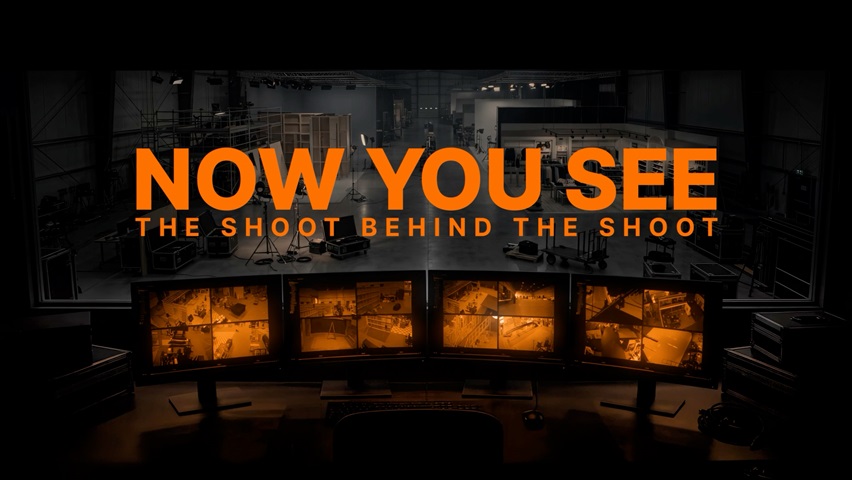
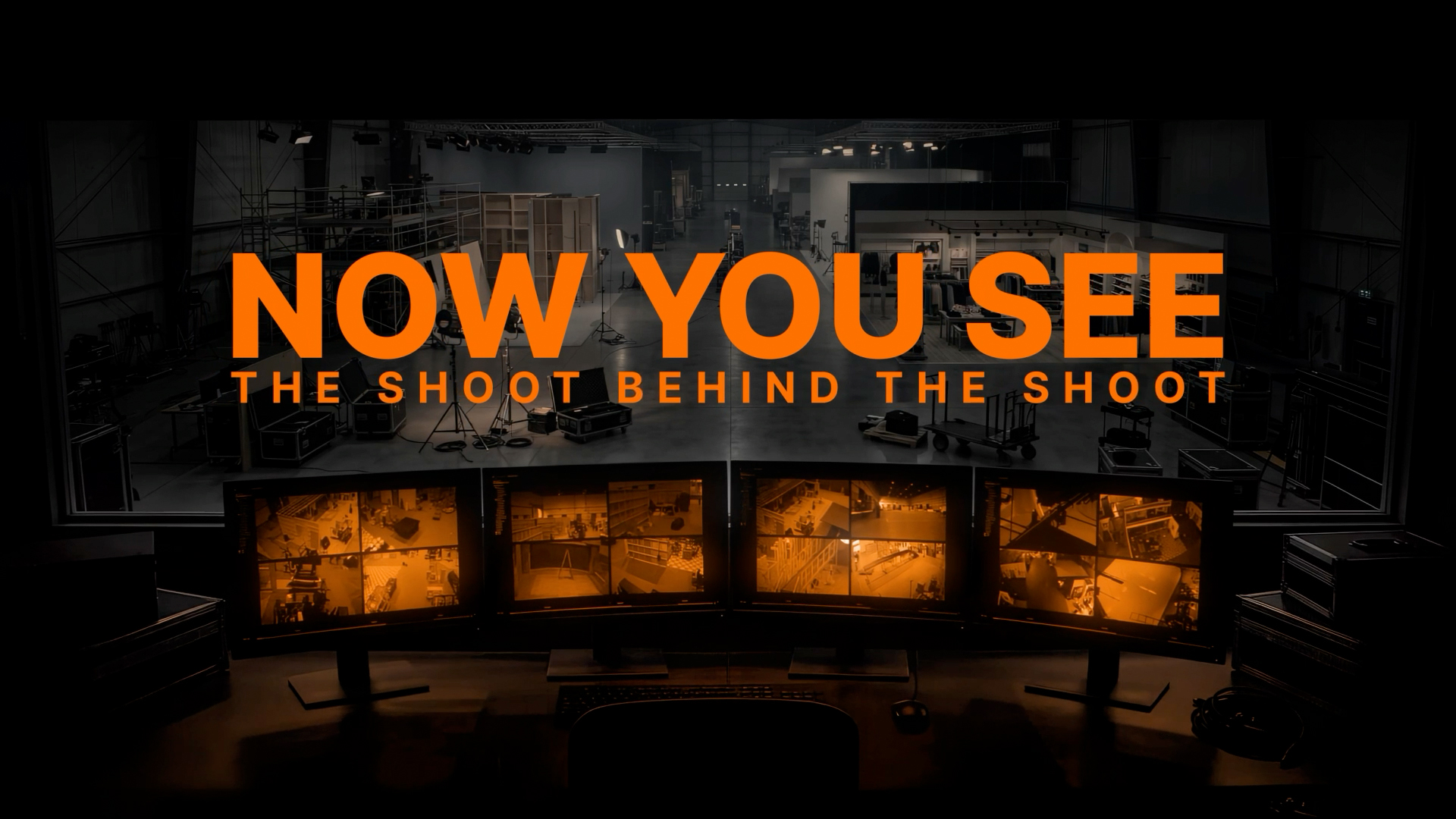
Global vision solutions company Hanwha Vision teamed up with Cheil to test its AI-enabled cameras and software on a film set while shooting a commercial, starring Hollywood actress Amanda Seyfried. To establish how Hanwha Vision’s AI vision solutions can serve a variety of businesses and industries, Cheil turned the conventional commercial production into a demonstration.

Hanwha Vision’s commercial, directed by award-winning director Michael Gracey, shows off its latest innovations as the story follows the actress navigating a larger-than-life screen test. While filming the commercial, Hanwha Vision’s own technology was put to the test.

The entire commercial production was engineered to prove how Hanwha Vision’s AI vision solutions can help run a safe and smooth shoot. A total of 42 AI-enabled cameras were installed on set prior to any crew activity. Throughout the production, the cameras and software monitored, recorded, and analyzed every inch of the soundstage.

Tal Shub, Global Executive Creative Director at Cheil Korea, said, “Using the product in an unconventional way is what makes this work truly stand out in the category. The teams at Cheil and Hanwha Vision crafted a campaign that doesn’t just deliver a memorable message — it proves the real power of the technology.”  

Hanwha Vision’s cameras and software captured high resolution video and detailed data 24/7. People, movement, safety, workflow, and operational behavior were analyzed in real time to improve the efficiency on set. 

The film set was chosen as the best environment to prove Hanwha Vision’s technology due to its complexity and having all the challenges of many industries in which Hanwha Vision provides solutions, including traffic, access, crowd flow, and asset protection.

The resulting footage and data from the film set became the campaign’s centerpiece across all mediums including behind-the-scenes content, social posts, out-of-home, campaign website, and trade show materials.

“This campaign was never just a commercial — it was living proof of what our AI vision solutions can do. 42 cameras, 7,014 hours of footage, and 319 people on a working soundstage gave us the most demanding test environment we could ask for, and our technology delivered,” said Hanwha Vision. 

The global campaign “Now You See” will run throughout the year. Cheil Korea is the creative agency.

View “Now You See” case study:


View “Now You See” commercial:


Insight

Port in a Storm

Jul. 30, 2026

The brands that will survive the great commoditisation aren't the ones trawling the deep end. They're the ones wise enough to offer shelter.

By Kunal Ghosh, General Manager – Strategy, Cheil South West Asia

There is a German word, Weltschmerz, that translates roughly as “world-pain”: the ache you feel when reality refuses to match the life you were quietly promised. We are, at present, living inside that ache. Markets lurch. Jobs dissolve into algorithmic mist. Conflicts that once felt geographically distant are suddenly local. There’s a persistent feeling of dread and anguish that the Danish film Another Round captured hauntingly, “I have not been okay for a long time.”

In response to this, brands have done largely nothing. Most are still selling. They have continued to retarget shamelessly across vulnerabilities, to feed recommendation engines rather than human memory, to build factories churning scroll-stopping creative and influencer pipelines. The marketplace is louder, faster, and more technically impressive than it has ever been. It is also less trusted than it has ever been. Brands gained precision and lost humanity. I call it a warmth crisis.

As an industry we have become extraordinarily good at reaching people yet remarkably ineffective at reassuring them. We are confusing signal strength with emotional presence, obsessing over number of contacts while it is the quality of contact that should matter. Ipsos’ recent global research mentions Empathy as a driver of brand success, quoting “people feel close to a brand is likely driven by the empathy projected by the brand.” People feel close to brands that project care, the ones with harbour lights on.

The way forward through the way back

When the ground shifts, people don't go shopping. They recoil. They return to places, moments, and people that once felt recognisable because it is known. 

Like watching reruns of The Office and Seinfeld while there are new titles released on Netflix each week. Like anti-trend fashion with vintage clothes or personal choices getting preferred over the latest “core” on Instagram. Like adults investing in toys or comics as a ‘permission slip’ to be unproductive and agenda-less. Like choosing record over the stream, the paper notebook over an app, the handwritten note over the email. Rather than stepping backward, we are going inward. It’s a structural shift toward legibility.

Svetlana Boym writes in her book The Future of Nostalgia about its two forms: the restorative kind (nostos), which tries to reconstruct the past such as the old logo revival, or the relaunch of a discontinued heritage product. The reflective kind (algea), which dwells in the longing and the feeling of the past. The brands worth mentioning are doing the latter by carrying its emotional register forward.

In simpler words, they bring alive a feeling of “the simpler times”.

The many manifestations of the simpler times

At the level of brands, I have seen this idea taking four distinct forms:

Social simplicity is the promise of fewer, deeper connections over aimless networking. It’s the antidote to the set expectations of our times. Heineken’s “social networking since 1873” is one of the best examples of a brand going against the current and restoring the magic of meeting strangers in a bar over a beer. In a category that considers ‘occasions’ as the ultimate success metric, they are betting on depth over frequency which is rare for a brand of that statute.

Emotional simplicity is the warmth, kindness and predictability at a time of volatility. IKEA, as a brand or as a store, doesn't sell furniture so much as it encapsulates the feeling of being looked after. Whether it’s about helping through new parenthood or comforting a baby monkey in a zoo, anything that IKEA does feel like something a family member would; like an embodiment of the spirit of Hygge. In a distant category, another brand does this in a completely different manner. Heinz sells certainty that a table will have a known taste anywhere you go. The emotional contract is the predictability of the experience, and the reassurance that some things will still be what they were.

Cognitive simplicity is the gift of fewer choices. It brings clarity in a world full of overwhelming options. “Weniger aber besser” (less but better) as the legendary designer Dieter Rams had prophesized all those decades ago. Muji's founding philosophy mujirushi ryohin, ‘no-brand quality goods’ was a revolt against consumer excess since the 1980s. To this day they are living up to that promise of bare essentials and nothing more. The Ordinary did a reset on the beauty industry’s fixation with mystification when they stripped the category down to the essentials with products named after active ingredients and percentages like Hyaluronic Acid 2% + B5. The transparency and reduction of overload was the brand’s disruption.

Temporal simplicity is perhaps the most subversive of all: the invitation to stop. The permission to slow down in a culture obsessed with speed. While KitKat's seventy-year-old positioning "Breaks are good for you" is the first thing that comes to mind, the most unique case I can think of is Guinness. They made the two-minute pour, the wait for the “Good Things” a part of the brand ritual. Can’t help but praise the famous 1999 ad “Surfer” which showed how waiting for the right wave and the right pint are both justified. At a time of rush, they held the line. The gratification became more when it was not instant, patience itself became a form of pleasure.

No such thing as nostalgia marketing

The cultural theorist Mark Fisher offered a term: hauntology, a critical view that our culture is haunted by futures that never arrived: that we're living in a present which borrowed its aesthetics from a remixed version of the past. 

It is a fair challenge to the argument of ‘the simpler times.’ Brands that are trying to create a sense of the past will risk trapping themselves in a cycle of old ideas, which ultimately blinds them to new horizons and promotes a culture of cocooning.

The answer lies in the distinction. What Hauntology points at is the cynical approach: the brands that sell nostalgia as spectacle. The ones that borrow the aesthetics of the past as a shortcut to run its next marketing campaign. The ones recreating that retro look or a grainy filter or a creative brief that says "make it feel like the nineties but target Gen Alpha anyway." We have witnessed enough brands jumping onto this “nostalgia marketing” bandwagon with cheap tricks like the old logo revamp or referencing a cultural moment they have no connection with. That is not shelter, that is set dressing.

The brands I am arguing for are doing something more fundamental. They are finding the emotional truth underneath memory such as belonging, clarity, the feeling of being protected and cared. They revisit the assurance that simpler times were possible and therefore still are.

The clear choice: commodity or sanctuary

The Edelman Trust Barometer has, for years now, tracked the steady erosion of institutional trust. Kantar's 2026 marketing trends paper identifies trust as the primary currency of brand growth. Ultimately, trust comes from presence.

As consumers increasingly delegate decisions to large language models, brands will invest more in algorithmic visibility such as sponsored citations, paid recommendations, and machine-readable content real estate. They will increasingly find themselves reduced to a line on a list. In a spreadsheet, you have a transaction with the cheapest option that clears the minimum criteria instead of a relationship.

While many brands will continue optimising for attention, efficiency, and conversions at cost of becoming a commodity, a few will offer emotional sanctuary. They will be disproportionately valued because they were there. While the rest were busy selling, they sold the feeling of being held.

They turn out like a memory. A ritual. A feeling. A known face. A timeless place. Less interruption, more intimacy. Less persuasion, more presence. Less spreadsheets, more spreading hope.

Though this Weltschmerz in reverse, as one might call it, is perhaps something even quieter, it is the recognition that the world still contains pockets of warmth, and that some of it arrives in the shape of a shareable chocolate bar, a cold beer with strangers, a car that takes you home on the holidays, a store door that opens into somewhere familiar, a playlist that sounds too personal to have been curated for anyone else. 

These brands, however rare they are, feel like refuge at time when the whole world is feeling displaced. They leave the door open. They invite, saying, “Come in. It’s a perfect day. There's coffee brewing. Music playing. You are at home here. In some way that matters, you always have been.”

Insight

From estimation to verification: Hey Dealer "Used Cars: What You See is What You Get"

Jul. 9, 2026

By Wonjeong Jang, The SOUTH Team 2, Cheil Korea


'Hey Dealer Revolutionizes the Used Car Market'

From a successful launch to the groundbreaking "I'm Going to Break Free" campaign that reinvented how we value used car purchases, Hey Dealer has consistently shattered industry conventions and set new standards.

But here's the challenge: Considering the used car buying and selling cycle, consumers engage with this service perhaps once every three years. So how do you make innovation a daily reality rather than a once-in-a-lifetime experience?

That's why this campaign decided to answer not with lengthy explanations, but with a shocking proof by revealing the tangible reality itself.

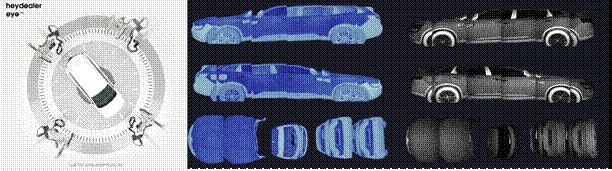
A technology that ends the "age of estimation," where we could only guess a used car's condition based on paperwork, and opens the "age of verification," where we can see directly with our own eyes: An MRI for used cars.

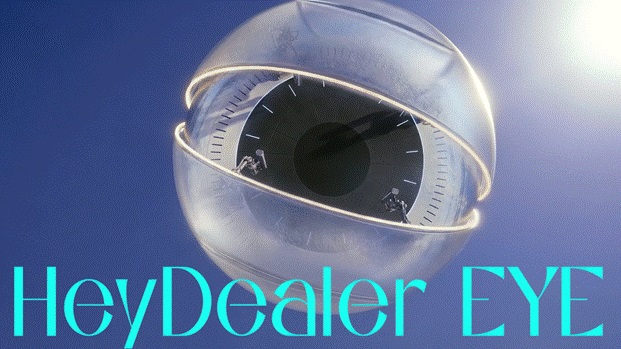
Introducing Hey Dealer eye which is Korea's first thermal imaging-based vehicle AI diagnostic solution.


※ Source: Hey Dealer official website


The Remarkable Future Ahead We Will See Through 'New Eyes'

We needed to establish a sense of arrival that through Hey Dealer 'eye,' people would experience a fundamentally a new way of seeing used cars.

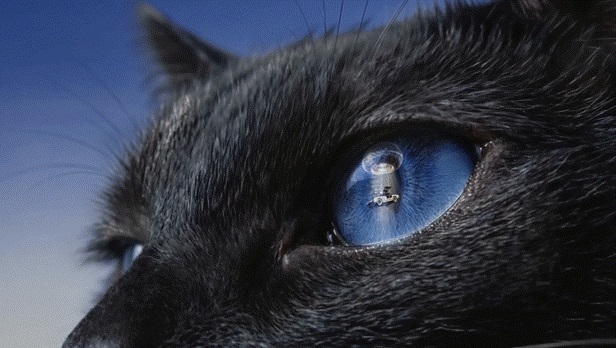
In the film, rather than listing technical specifications, we preserved Hey Dealer's signature voice while delivering a completely fresh visual shock to convey eye's innovation with genuine impact.


A Sci-Fi-Style Birth: The Eye that Became a Spaceship

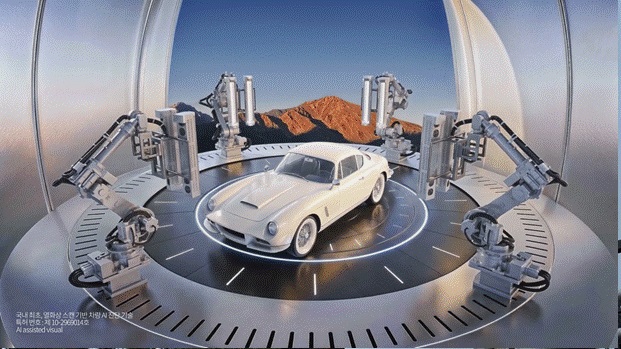
First, we infused imagination so eye wouldn't appear as merely a scanning device. Instead, we depicted it as an overwhelming, monumental form like a UFO from a science fiction film.

Through a dramatic sequence of a UFO appearing and absorbing an entire used car, meticulously scanning its interior, and finally implanting that vision into human eye, we gave eye a strange yet powerful birth narrative.


This Isn't a Machine. It's a New Eye.

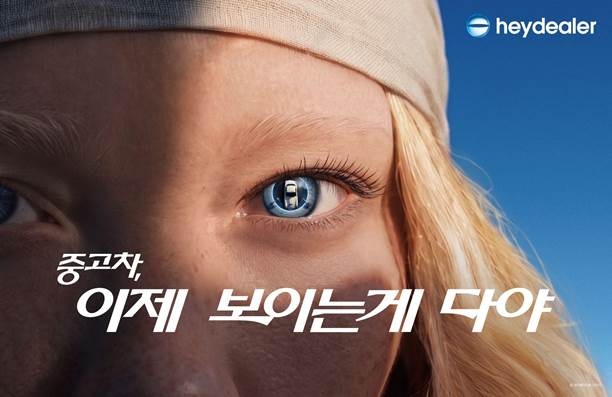
True to the naming, another critical element was creating an intuitive visual connection between the device and the human eye. The fact that the "eye" takes the form of a human eye and embodies the value of human insight makes it uniquely differentiated from any other scanning device.


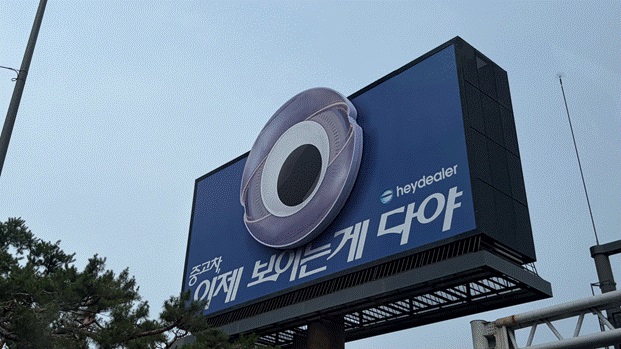
This message received full support through multi-channel IMC promotions, from outdoor media to collaborations with creator Kim Eyeball, delightfully and decisively amplifying the character of the "eye" as a true eye.


※ A giant eyeball affixed to a billboard near the Hannam Bridge intersection


Innovation Deserves Innovative Production Methods

This film made particular use of AI creative to express Hey Dealer eye's technological sophistication with precision and intuition. However, we discovered limits in AI's ability to render the intricate details within eye itself, so we compensated with 3D graphics and post-production refinement to achieve subtle realism.


Finally, Adding Two Spoonful of Humanity

Alongside AI creativity and the technological marvel of the eye, we faced one concern: The coldness and distance that technological innovation can convey. So, we deliberately preserved human warmth.

First: the human subject.

We took great care to escape the artificial perfection inherent to AI-generated imagery.

Above all, the realism conveyed by freckles and fine wrinkles, combined with an unconventional styling that creates a mysterious aura making it hard to pinpoint the character’s nationality, resulted in a unique character who feels plausible yet unreal.


Second: the BGM.

We incorporated Louis Armstrong's timeless classic "What a Wonderful World," adding an emotional touch that breathes warm soul into cold machinery. Behind this choice lies deeper meaning which is Hey Dealer's vision for the ideal used car world the brand wants to build.

Particularly clever is how the lyric "I see trees of green, red roses too" naturally blurs 'I' into 'eye'—a subtle easter egg conveying the core message that the eye reveals what was previously invisible. It is a small but intentional nod.


Used Cars: Now, What You See with the Eye is All There Is


Until now, buying a used car meant relying solely on service records and paperwork history. But the arrival of the 'eye' is about to bring remarkable change to the used car ecosystem. A new world is already unfolding before our eyes, one where hidden repair marks become visible, and consumers can purchase used cars with genuine confidence.

We hope you'll look forward to experiencing the transformed used car market you'll discover through Hey Dealer eye.