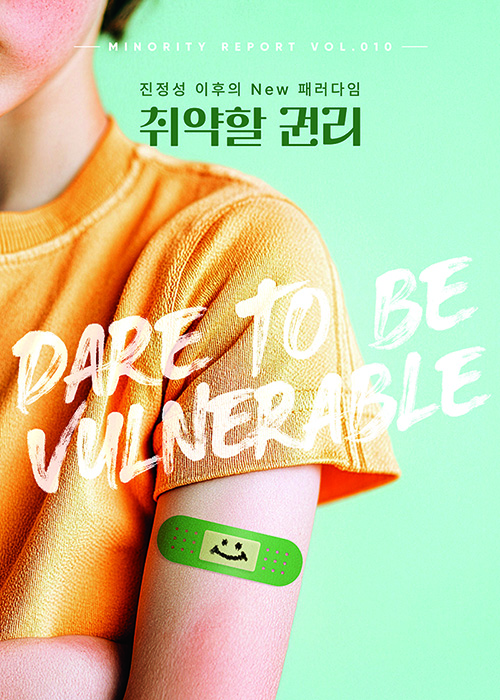
Utilizing in-depth research and analysis of Gen Z’s habits, Cheil Korea’s thought leadership-driven strategic insights group, Yosm Institute, identified a new trend of exposing personal vulnerability as the next defining topic in brand marketing.
Gen Z’s “Active Vulnerability”: Owning Your Flaws Before Anyone Else Can
In its latest Minority Report: The Right to Be Vulnerable, Yosm Institute points out that for a generation raised amid economic instability and geopolitical uncertainty, vulnerability is not a momentary crisis. It’s a default setting. The report connects this underlying psychology to recent global trends centered on Gen Z, including the resurgence of shamanism and witchcraft.
The report highlights that members of the Gen Z generation do not see vulnerability as a weakness to hide, but as a meaningful flaw worth sharing. It goes on to note that exposing personal weaknesses or flaws has become a kind of cultural currency among Gen Z. From mental health confessions to emotional “crashing out” social media posts, Gen Zers are now openly sharing their vulnerabilities with others on their socials, and this has become a unique new cultural phenomenon the report dubbed Active Vulnerability.
It traces the rise of Active Vulnerability to three underlying dynamics: a pushback against technological advancement, a reaction against older generations, and a rejection of the shallowness of social media relationships.
A prime example of the latter is how advances in AI and technology have ushered in an era of excess perfection where anyone can mass-produce flawlessness with ease. This helped to create a climate where our human imperfections are now valued more than social media projections of perfection. This shift can be seen in how unedited photos and unfiltered posts are gaining traction on social media, along with the rise of things like photo dumps, where users post multiple raw, unedited images at once rather than one single perfect shot.
“Boldly exposing one’s flaws has become a strategic choice to establish your own uniqueness and scarcity to gain a powerful level of trust,” said a Yosm representative. “For Gen Z, vulnerability is no longer a weakness – it’s a differentiated way of finding success in this new social media landscape.”
The Shift in Marketing Paradigms: From Authenticity to Vulnerability
The report emphasizes that vulnerability is not simply an emotional code unique to Gen Z. It’s a lesson every brand and company, across every generation, must learn.
The marketing paradigm has shifted through distinct eras. In the 1990s, brands appealed to consumers by presenting aspirational images and lifestyles. From the 2010s through the early 2020s, brands shifted toward authenticity. Companies built trust by aligning their actions with their stated values and demonstrating consistency between words and behavior. Now, the report forecasts that active vulnerability – the willingness to expose one’s deep inner struggles and flaws – will become the most powerful tool for earning trust and a core strategy for brand differentiation.
Yosm proposes three approaches for companies to leverage this shift and apply the vulnerability trend to their brand strategy. First, brands can transform their weaknesses into distinctive and appealing core attributes. Second, companies can treat vulnerability as potential for growth and communicate transparently about their progress and improvements. Third, brands can move beyond messaging and demonstrate vulnerability through concrete actions that contribute to real social change.
The report likens this process of turning vulnerability into brand appeal to Kintsugi (金継ぎ) – the Japanese traditional pottery technique of filling cracked ceramics with gold, thereby making the piece more beautiful than before. Marketers, the report stresses, must now seriously consider how to harness their brand’s vulnerabilities in light of this paradigm shift.
“In today’s volatile business landscape, preemptively revealing your own vulnerability has evolved beyond reputation management into a core differentiating strategy that can make or break a brand,” said Park Miri, head of Yosm Institute at Cheil Korea. She adds, “It will build a powerful bond with true fans who are even willing to embrace a brand’s scars and reshape market dynamics by becoming a proactive growth engine that helps brands secure a dominant position.”
Yosm Institute Provides Thought Leadership Through the Minority Report
Yosm Institute is Cheil Korea’s dedicated business insight organization, grounded in market-leading thought leadership. The team analyzes the root causes of contemporary trends, delivering their findings as reports and consulting services.
Among its publications, the flagship Minority Report series goes beyond conventional trend analysis to identify subtle signals across society and generate insights that help clients anticipate market shifts. The report is distributed exclusively to C-level executives at Cheil Korea’s clients.
Since its launch in 2011, the series has established itself as a strategic reference for business leaders, illuminating diverse themes that went on to define their eras: Fandom (2018), Cutting Ties (2021), Post-Truth (2024).