


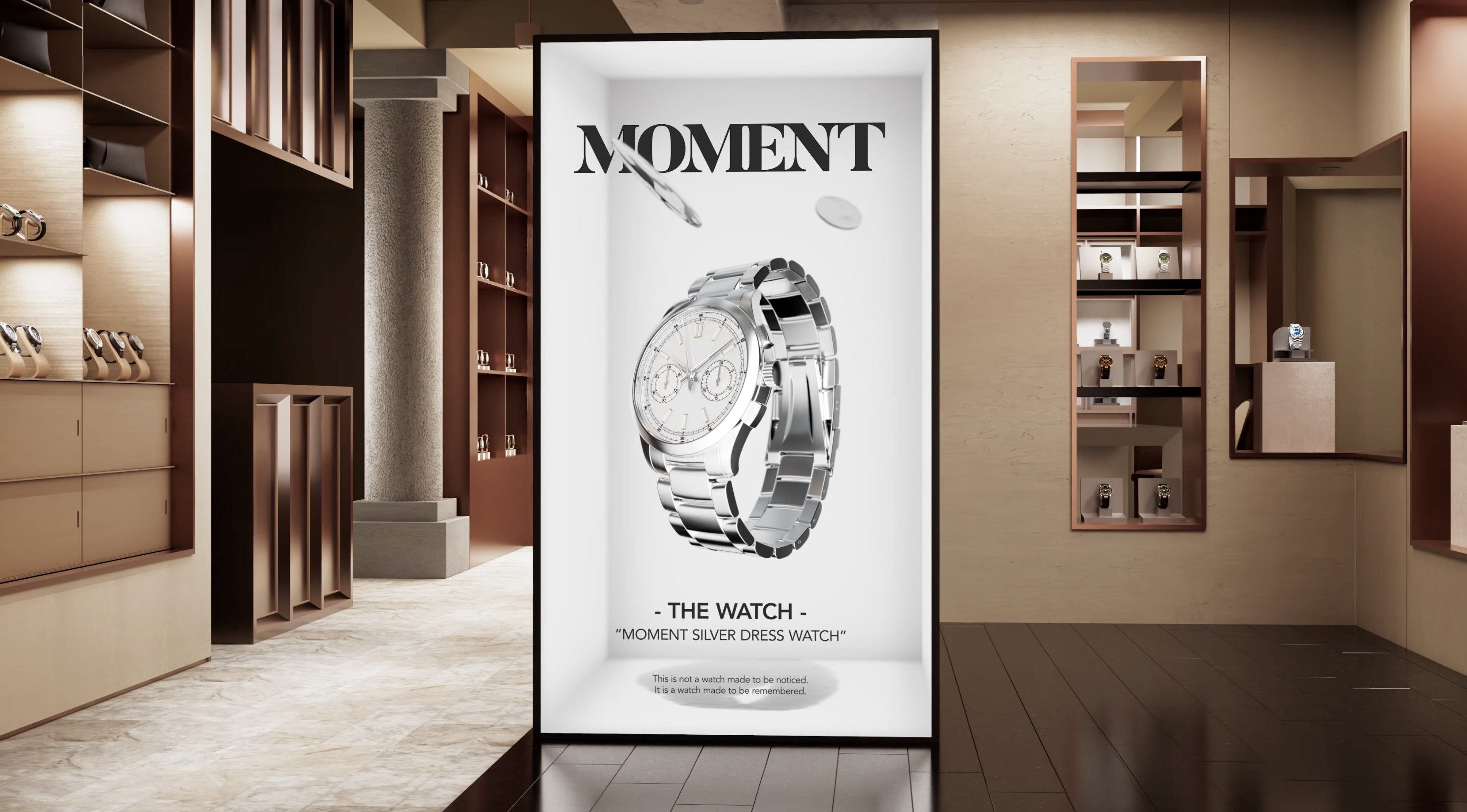
Cheil Australia is a creative and production specialist that makes depth-based content work in the real world. Spanning glasses-free spatial, 3D and depth-based screens, Cheil helps brands turn once-static imagery into immersive experiences. The growing need for specialist 3D content and experts in immersive experiences 3D screens typically use advanced depth tracking and mapping to make objects and visuals appear to float up to roughly a metre beyond the screen, without the need for headsets or 3D glasses. This effect only works if the content is specially built in specific formats that newly launched spatial screens require. Generic 3D, low-resolution imagery or flat video converted at the last minute makes for shallow and underwhelming real-world viewing conditions. Cheil Australia provides the expertise to bridge this gap, combining creative direction, 3D production, and technical know-how to spatial display ecosystems through: Creative strategy for spatial storytelling: Translating brand messaging and campaign goals into concepts that capitalise on depth, motion and perspective that is unique to 3D spatial screens End-to-end 3D rendering production: From modelling and texturing to lighting, animation and rendering, Cheil Australia produces native 3D assets optimised for spatial storage Conversion and optimising of existing assets: For those with existing 3D models or 2D campaigns, we adapt and enhance them so they perform convincingly in a glasses-free environment Technical integration support: We work with teams to ensure content runs seamlessly, whilst considering specific file formats, playbacks and screen placement considerations Measurement and iteration: Cheil Australia helps to define what success looks like for our partners, refining creative based on real-time performance data from the installations
Cheil Australia Q&A:
Q. How is 3D spatial content different from normal 3D or video?
Normal 3D or flat video isn’t optimised for the specific depth, viewing zones and parallax of new 3D spatial signage. True spatial content is authored or adapted to exploit those zones so objects look correctly positioned in 3D space from multiple viewing angles, without distortion or ‘flat’ results
Q. Do i need to create 3D assets, or can existing content be used?
You don’t always need brand‑new assets for 3D signage. Existing 3D models, animations or even 2D campaigns can often be adapted for spatial screens. This is where Cheil Australia comes in. We work with you to optimise existing assets to rework depth, camera moves and timing so the content reads convincingly in a glasses‑free 3D environment.
We ensure all content matches that of your premium brand.
Q. Where do 3D spatial screens work best in Australia?
Spatial screens perform best in high‑traffic commercial locations such as flagship retail stores, shopping centres, airports, transport hubs, event stages and expo booths across cities like Sydney, Melbourne, Brisbane and Perth. Anywhere you need to stop people scrolling or walking past is a strong candidate for 3D spatial signage.
Q. How long does it take to produce 3D spatial content?
Timelines vary by complexity, but a typical 10–20 second hero spatial piece can take anywhere from a week to several weeks from concept to final render, including review rounds and technical checks. Simpler adaptations of existing 3D assets may be faster. Cheil Australia will scope your project and provide a clear schedule based on your campaign dates and screen locations.
Q. Can 3D spatial be measured or optimised?
Yes. While the creative itself is 3D, you can still measure impact using dwell time, foot traffic, engagement observations and, where available, data from your media or retail partners. Cheil Australia helps define success metrics and can refine creative over time based on how audiences respond at specific locations in Australia.